

In September 2011, I made the big leap: living in the gift economy. At 100%. Several years have passed, with many adventures on seas sometimes calm, sometimes windy, and above all, a beautiful experience gained that I enjoy sharing in the upcoming series of articles. I hope this will also partially answer the many messages I receive. Many people wonder about it, and some wish to live this experience partially or entirely, which requires a lot of technical expertise. The gift economy does not happen by chance.
Precisely, this first article aims to be primarily “technical.” It lays down the foundations and key concepts of the gift economy. Later on, I will talk about my more personal experience, my failures and successes, the lessons learned, and the questions it raises today.
But let’s start at the beginning…
What do we call the gift economy?
The gift economy involves person A offering something valuable to person B without person B having to give anything in return or feel indebted to A.
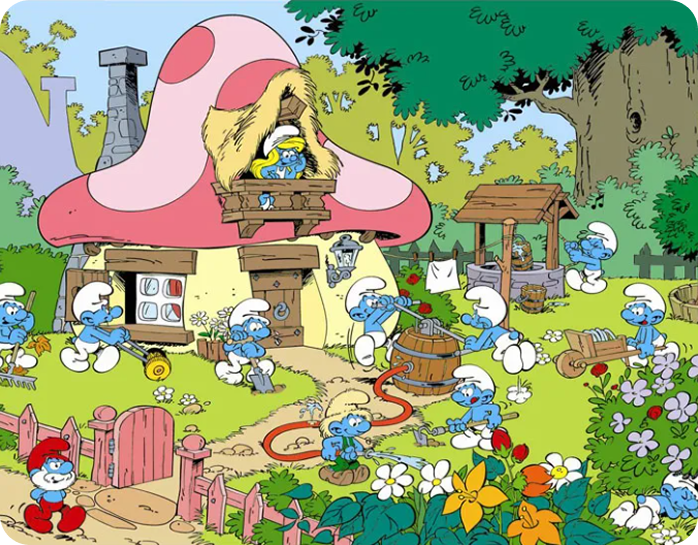
People often say that one gives without expectation and without counting… Quite not true. Although the gift implies no exchange or debt (unlike the market economy), a context always surrounds the act of giving. A celebration, a birthday, the desire to help, a gesture of love, a generational transmission, social life in a village, a care… all these contexts determine the nature of the gift, its quality, and its quantity. Therefore, one does not give anything to anyone at any time. If I live in a village, I may decide to help my neighbor repair their roof, but will I give them my house? I give a book to my friend for their birthday, but will I give them a million euros just because I possess them? For my child, however, I will give my life and my time without counting. At the hospital, I donate my blood; on Couchsurfing, I offer lodging to a traveler. There exist circumstances where one may sacrifice their life for others, out of love, ideology, an act of war or peace, or faith. If I die, I can also offer my organs. One may also give time for a cause… Every example mentioned here shows the importance of context in determining the nature of the gift. One must never ignore the context.
The market economy
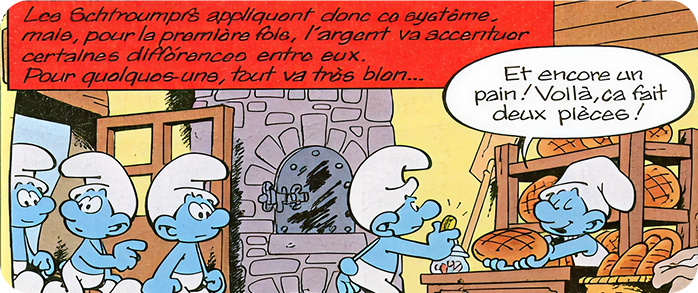
The market economy may take place with or without money. If it uses money, it may exist in the form of currency (the kind of money we know based on debt and in which we grew up) or other monetary forms yet to remain invented (see “Towards a post-money society“). If we use money, it becomes what we call a scarce currency. Scarcity then fuels competition, hoarding, and the concentration of wealth and power. Money represents a suitable technology for a human society with pyramidal collective intelligence, which precisely builds itself on market economy, competition, and scarcity. I foresee that the transition to holomidal collective intelligence will happen with the advent of post-money technologies that will foster sharing and cooperation without removing the benefits that competition can bring when it proves fertile.
The language of the gift economy
We grow up, live, eat, sleep, and dream within the paradigm of the market economy. This economy forms our daily landscape, which we describe using hundreds of words, terms, and concepts: purchase, sale, discount, margin, turnover, taxes, work, salary, costs, profits, losses, interest, credit, property, shares, bonds, debt, loans, rates, parity, coupons, currency, money, banknotes, credit cards, paid, free, ROI, leverage, rent, hoarding, investment, depreciation, EBITDA, M&A, stock market, securities, bonds, mutual funds, liquidity, speculation, derivatives, broker, trading, latency costs, data snooping, and so many more…
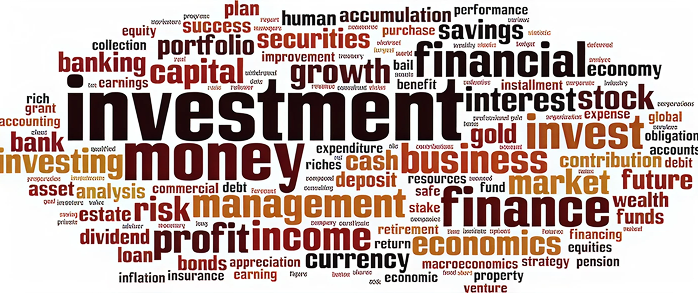
How many words do we have to describe the gift economy?
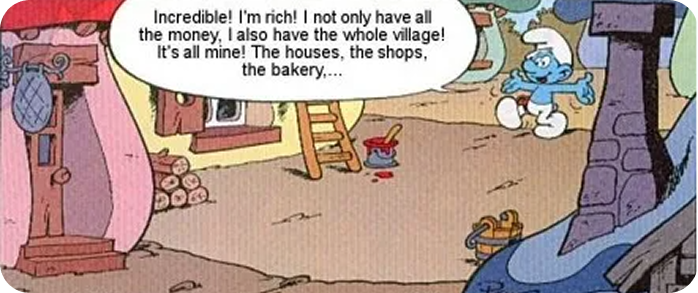
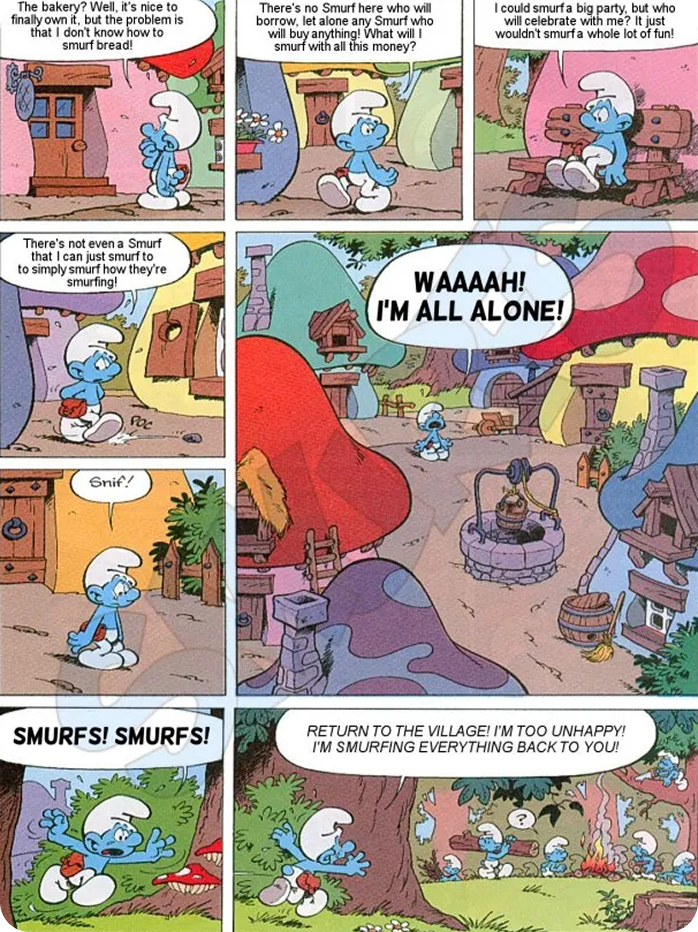
Fewer than ten, most of them vague and unclear. They even carry connotations of naive do-gooders or idealistic Smurfs. Articles found here and there on the subject, including on Wikipedia, reflect this vagueness and lack of theoretical and practical experience of their authors. Vague and unclear, they borrow words from the market economy. For example, they speak of exchange when they mean a gift, and they confuse gift and gratuity without hesitation. “Experts” on the subject even go so far as to mention the notion of gift and counter-gift, so entrenched does the mind remain in the market and debt. This confusion reaches its peak in the word “wealthy” or “rich.” If I call someone “rich,” everyone will think of their bank account. Who will think of the most essential wealth, that of happiness, self-fulfillment, or the quality of one’s relationships? In most modern cultures, rich and money get mixed up. The consequences of this ontological confusion seem profoundly destructive on social and psychological levels. To give an image of our lack of vocabulary, we behave towards the gift economy like car manufacturers trying to describe an airplane. Even if there we can see common points, the vocabulary and concepts of automotive mechanics will never describe an airplane, let alone make it fly. We need to develop a new science -aeronautics– with its names, laws, formulas, and definitions. Similarly, the language of the market economy will never allow us to describe and operate the gift economy. We need a “science” of the gift economy and, more broadly, an economic science that transcends today’s dominant monetary and debt economy.

HoYet the gift economy offers a far wider range of possibilities than the market economy, a bit like aviation compared to the automobile, where one moves from 2D to 3D. The gift economy allows for the creation of more wealth; it brings a multidimensionality not found elsewhere; it offers a societal model more holistic and more integrative of the individual in the collective and the collective in the individual. But as long as we lack a language to describe and make it work beyond small groups, the gift economy will never exist on a large scale.
There remains much to invent to describe this paradigm, its mechanisms, its social engineering, its technical infrastructure. One of the primary tasks of my adventure consists of defining precise words, definitions, and concepts to describe this other reality.Some terms to begin with…
The mini glossary below provides definitions as I use them in the context of collective intelligence, a discipline that, of course, includes the question of currencies and wealth technologies.
Economy :- The management and regulation of wealth. This definition goes far beyond, and in a more universal way, the “production, distribution, exchange, and consumption of goods and services,” as indicated by Wikipedia. Most dictionaries remains confined to the notions of production, distribution, exchange, and consumption, which implicitly limits us to purely material wealth. In the way I see the economy, we speak of wealth in the broadest possible sense, including non-material wealth. To distinguish this term from its old meaning, I also speak of deep wealth.
Gift economy :- An economy based on the act of giving and receiving without conditions of exchange or debt.
Market economy :- An economy operating on the conditions of reciprocity, through exchange or debt, giving an equivalent value to what one receives; otherwise, the exchange does not occur.
Gift :- “Gift” does not mean “exchange.” If, in giving something, you expect something in return (another “gift,” consideration, love, reputation…), then you operate in a different dynamic than that of a gift. Similarly, if when someone gives you something, you feel in debt, you continue to operate in a form of exchange. Gift means giving or receiving without compensation. Think context. What context leads you to give or receive? Clarify this with your peers and yourself.
Gratitude :- Gratitude and acknowledgment form the keystone of the gift economy. I like this English term (and new) giftism. You may receive a gift and feel like expressing your gratitude, whether by saying “thank you” or offering another gift, back or forward. I insist: it does not constitute an exchange.
Holopticism :- Coming from the Greek roots holos (whole) and optikè (seeing), holopticism implies “seeing the whole.” Imagine yourself playing a team sport. You constantly have access to the “whole,” that is, what happens holistically on the field. You see your team as a living entity, as well as the opposing one. Moreover, what makes a good player comes as much from their technical ability to play the ball as from their quality as a “holoptician,” that is, their ability to understand and see the whole. This requires some training. Now imagine living in a small village. You know what you can offer and receive because you constantly access this whole. You feel the balance of things, what you can give and not give. You sense if an action will help not only a person but also contribute to the general wealth, from which you will benefit. Holoptism offers this extraordinary property that connects the individual to the whole and the whole to the individual, allowing a dialogue and continuous adjustments. It makes the gift economy possible (as explained below). See a more advanced definition.
Free / paid :- These words do not belong to the language of the gift economy. They belong to the market economy to distinguish what gets paid from what gets transmitted “without paying” (often to buy something else later). But I insist — and I know it takes a lot of time to integrate — gift does not mean free. Gift means… gift. The gift involves efforts and manifestations of various kinds of immaterial wealth to occur. One does not give without the famous context I mentioned earlier. For example, when a company asks me for help, I set very strict conditions for the context (I will detail this later). However, I do not ask them to pay me or give me something in exchange.
Wealth :- Everything that brings us closer to the Beautiful, the Good, the True. See lectures on the subject.
Integral wealth :- Integral wealth includes all forms of wealth: mobile, measurable, rankable, and acknowledgeable. See lectures on the subject.
Integral wealth :- Integral wealth includes all forms of wealth: mobile, measurable, rankable, and acknowledgeable. See lectures on the subject.

How many words do we have to describe the gift economy?
Fewer than ten, most of them vague and unclear. They even carry connotations of naive do-gooders or idealistic Smurfs. Articles found here and there on the subject, including on Wikipedia, reflect this vagueness and lack of theoretical and practical experience of their authors. Vague and unclear, they borrow words from the market economy. For example, they speak of exchange when they mean a gift, and they confuse gift and gratuity without hesitation. “Experts” on the subject even go so far as to mention the notion of gift and counter-gift, so entrenched does the mind remain in the market and debt. This confusion reaches its peak in the word “wealthy” or “rich.” If I call someone “rich,” everyone will think of their bank account. Who will think of the most essential wealth, that of happiness, self-fulfillment, or the quality of one’s relationships? In most modern cultures, rich and money get mixed up. The consequences of this ontological confusion seem profoundly destructive on social and psychological levels. To give an image of our lack of vocabulary, we behave towards the gift economy like car manufacturers trying to describe an airplane. Even if there we can see common points, the vocabulary and concepts of automotive mechanics will never describe an airplane, let alone make it fly. We need to develop a new science -aeronautics– with its names, laws, formulas, and definitions. Similarly, the language of the market economy will never allow us to describe and operate the gift economy. We need a “science” of the gift economy and, more broadly, an economic science that transcends today’s dominant monetary and debt economy.
Some terms to begin with…
The mini glossary below provides definitions as I use them in the context of collective intelligence, a discipline that, of course, includes the question of currencies and wealth technologies.
Economy :- The management and regulation of wealth. This definition goes far beyond, and in a more universal way, the “production, distribution, exchange, and consumption of goods and services,” as indicated by Wikipedia. Most dictionaries remains confined to the notions of production, distribution, exchange, and consumption, which implicitly limits us to purely material wealth. In the way I see the economy, we speak of wealth in the broadest possible sense, including non-material wealth. To distinguish this term from its old meaning, I also speak of deep wealth.
Gift economy :- An economy based on the act of giving and receiving without conditions of exchange or debt.
Market economy :- An economy operating on the conditions of reciprocity, through exchange or debt, giving an equivalent value to what one receives; otherwise, the exchange does not occur.
Gift :- “Gift” does not mean “exchange.” If, in giving something, you expect something in return (another “gift,” consideration, love, reputation…), then you operate in a different dynamic than that of a gift. Similarly, if when someone gives you something, you feel in debt, you continue to operate in a form of exchange. Gift means giving or receiving without compensation. Think context. What context leads you to give or receive? Clarify this with your peers and yourself.
Gratitude :- Gratitude and acknowledgment form the keystone of the gift economy. I like this English term (and new) giftism. You may receive a gift and feel like expressing your gratitude, whether by saying “thank you” or offering another gift, back or forward. I insist: it does not constitute an exchange.
Holopticism :- Coming from the Greek roots holos (whole) and optikè (seeing), holopticism implies “seeing the whole.” Imagine yourself playing a team sport. You constantly have access to the “whole,” that is, what happens holistically on the field. You see your team as a living entity, as well as the opposing one. Moreover, what makes a good player comes as much from their technical ability to play the ball as from their quality as a “holoptician,” that is, their ability to understand and see the whole. This requires some training. Now imagine living in a small village. You know what you can offer and receive because you constantly access this whole. You feel the balance of things, what you can give and not give. You sense if an action will help not only a person but also contribute to the general wealth, from which you will benefit. Holoptism offers this extraordinary property that connects the individual to the whole and the whole to the individual, allowing a dialogue and continuous adjustments. It makes the gift economy possible (as explained below). See a more advanced definition.
Free / paid :- These words do not belong to the language of the gift economy. They belong to the market economy to distinguish what gets paid from what gets transmitted “without paying” (often to buy something else later). But I insist — and I know it takes a lot of time to integrate — gift does not mean free. Gift means… gift. The gift involves efforts and manifestations of various kinds of immaterial wealth to occur. One does not give without the famous context I mentioned earlier. For example, when a company asks me for help, I set very strict conditions for the context (I will detail this later). However, I do not ask them to pay me or give me something in exchange.
Wealth :- Everything that brings us closer to the Beautiful, the Good, the True. See lectures on the subject.
Integral wealth :- Integral wealth includes all forms of wealth: mobile, measurable, rankable, and acknowledgeable. See lectures on the subject.
Integral wealth :- Integral wealth includes all forms of wealth: mobile, measurable, rankable, and acknowledgeable. See lectures on the subject.
Holopticism as a condition for the gift economy
Indeed, the individual must have a clear perception of the community in which they operate to feel what they can give and receive.
The gift economy naturally occurs in a context of original collective intelligence (village, sports team, jazz band, family…), that of the small group where everyone sees and perceives each other. When I give or receive, I know the impact it has on me and the collective I belong to, thanks to holopticism. Holopticism exists as a natural property on a small scale; nature has indeed equipped us with a biological information system — our current senses and brain — that allows us to see the collective in which we evolve. Rather than a primary vision like that of a physical object, it involves a representation, a complex construction elaborated in our cognitive space. Most mammals, as well as some migratory birds, possess this faculty. What makes a good player in a sports team comes as much from their ability to play the ball well as from their ability to mentally represent the whole. It allows them to create symbiotic actions with the team, actions seen as forms of gifts offered and received (one does not “bill” for the kilometers run or the efforts invested).
Thus, no gift economy exists without holoptism.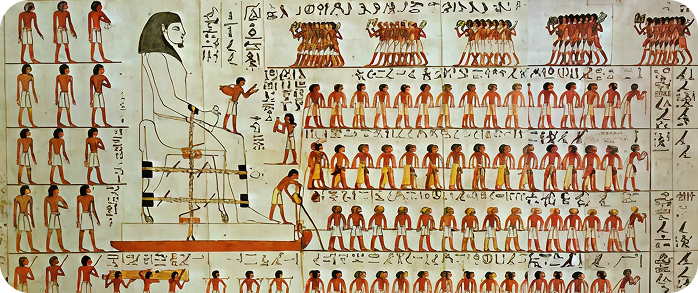
The market economy fits within this evolution, at the advent of pyramidal collective intelligence. Its emergence allowed large collectives to organize, entire civilizations to be born, with their castes, social classes, centralized powers, and chains of command. Money enabled the circulation of services and goods on a large scale, where economic equilibrium maintains itself through the market, the condition of reciprocity in every exchange.
The market economy extends well beyond our immediate sensory perception; the village becomes a city, a country, a continent, a planet. Macro, conceptual, abstract, immense, transcendent, too vast for the individual mind, many theories have tried to prove that the market economy possesses its own equilibrium. The well-known “invisible hand” that regulates and arranges everything gets attributed to it. We find here all the characteristics of an egregore, if not a religion. But more pragmatically, behind the invisible hand, one mostly finds powers concentrated in the hands of a few, on scales few people can imagine. Who realizes today the level of wealth and power concentration? It surpasses imagination. The market economy based on scarce money forms the DNA of pyramidal collective intelligence. Without this dynamic, it could not exist. Our current states, constitutions, and Human Rights rest on these cultural notions of property, work, and market, signatures of pyramidal collective intelligence. An entire paradigm that wrongly, it seems to me, claims to represent “natural law.”
If it undoubtedly represented a necessary step in human evolution, the market economy based on scarce money now shows not only its limits but also its toxic and destructive aspects for life and the planet. Not all wealth holds a price or undergoes transaction, far from it, and we cannot reduce the word “wealth” to material commodities. Moreover, life flows on Earth — resources, energy — cannot simply follow the market and money routes that converge towards megapoles and major economic centers. Life needs to follow its own flows, more complex and holistic. Humanity, therefore, has no alternative but to move to the next stage — probably the next species — that will build its reality on a new constitutive language of a new reality, the language of flows and integral wealth. This represents my work, with passion and patience. But I realize I oversimplify here when this requires long explanations, step by step.From holopticism to panopticism, towards the market economy
When we become too numerous and distant from each other, we lose holopticism, we shift to panopticism, which manifests as centralized and pyramidal mechanisms of control and regulation. Imagine society as a mountain. Those at the top see everything but without detail; those at the bottom see detail but lack an overall vision, with all intermediates between the two. Panoptical society, which characterizes pyramidal collective intelligence, builds itself with farsighted and nearsighted people. This relative blindness makes us lose holopticism, consequently our natural capacity to live in giving.
The gift economy naturally occurs in a context of original collective intelligence (village, sports team, jazz band, family…), that of the small group where everyone sees and perceives each other. When I give or receive, I know the impact it has on me and the collective I belong to, thanks to holopticism. Holopticism exists as a natural property on a small scale; nature has indeed equipped us with a biological information system — our current senses and brain — that allows us to see the collective in which we evolve. Rather than a primary vision like that of a physical object, it involves a representation, a complex construction elaborated in our cognitive space. Most mammals, as well as some migratory birds, possess this faculty. What makes a good player in a sports team comes as much from their ability to play the ball well as from their ability to mentally represent the whole. It allows them to create symbiotic actions with the team, actions seen as forms of gifts offered and received (one does not “bill” for the kilometers run or the efforts invested).
Thus, no gift economy exists without holoptism.And a few clarifications…
This may seem strange to some, but the gift economy constitutes the first form of economy we learn, the oldest and most natural. It begins with the family, where, as far as I know, we do not bill for what we give and receive. It then extends into the extended community, the village, the school, the sports team, friends… The gift economy represents the oldest social form we know, the one in which our cognitive and relational structures operate best. We will see why.
A terrifying error lies behind these beliefs. One can forgive it since everyone lives within the small market bubble where everyone sees noon at the door of their shop. Forgive it, but not accept it.
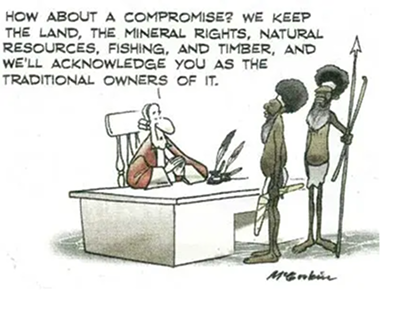
In fact, the market economy lives thanks to the gift economy. The market economy exists because trees offer their fruits, because the earth offers its resources, and humans appropriate them, because one day, humans landed in new places and declared them their property, because men and organizations also declare themselves owners of what they discover (research, data, processes, etc.). The market economy represents a tiny portion of the economy in general, provided we define the economy as the management and regulation of wealth (and not scarcity management).
Without money, the gift economy?
I hear this all the time: “you live in the gift economy, so you don’t use money?” False, it has nothing to do with that. Money represents a form of wealth like any other that one can give and receive as a gift. Also, the money I use today comes exclusively from gifts; I do not earn it in the sense of conquering it through a sale or negotiation. It comes through gratitude, and that delights my heart.
Free, the gift economy?
False as well, as specified in the definitions above. Free and paid belong to the market economy paradigm. When selling and buying disappear, the free-paid duality also disappears.
Yet, I hear people who try the gift economy say they do things “for free.” They harm themselves, and they harm the wealth they offer by devaluing it. Giving requires knowing how to clarify the context, the one I mentioned above. If you give or receive, always do it in a clear context for yourself and others. If you want to operate in the gift economy, you must eliminate the words “free” and “paid.”
Jam for the …?
To use the common expression, I have seen too many people exhaust themselves by giving jam to pigs (and God knows I love pigs, these sensitive and intelligent beings that we slaughter without conscience). In giving and giving again, they please themselves (the people, not the pigs), they follow an idea of a world that needs them, which flatters their ego. This illusion ends one day or another with a very low morale, where one feels exhausted, misunderstood, in need of recognition, facing an ungrateful world. This posture of compulsive generosity embodies the feminine syndrome, which gives, gives, gives, to the point of exhaustion, without the voracious “mouths” around realizing the situation.
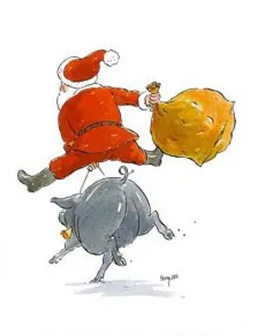
It goes without saying that the opposite side of this feminine syndrome — the masculine syndrome — manifests in the obsession with conquest and possession that characterizes the market economy through scarce money.
In other words, the gift economy requires practicing both empathy and care — the feminine — and rigor and boundary-setting — the masculine. One must learn to give and receive consciously, bringing us back, once again, to the clarity of context.
What about the gift economy on a large scale?
Until recently, we could not develop the gift economy on a large scale because we did not know how to create holopticism on a large scale. But in recent years, the arrival of the internet, social media, socialware, and communityware has shown that large collectives based on the gift economy can exist. Some examples: Wikipedia, Couchsurfing, Freecycle, Thingiverse, and of course, many MMOGs that pave the way to gamification. Play Ingress, for example, and you will understand.
The post-money technologies on which I work with others transcend the duality of gift/market. They will allow any collective, small or large, local or global, to define its own tools to organize, share, and produce its wealth, in market or gift mode. Utopian, this economic biodiversity? Then explain to me how the internet works if not on a vast biodiversity of technologies that allow organizing human experience?
These represent the main ideas. In my next article, I will talk about my more personal journey. See you soon!