

In the article Foreplay to Love, I shared some initial thoughts, the foundation of my relationship with love. Now, I will discuss the practical guides that direct my romantic journey.
When people ask me about my love life, I struggle to provide a simple oral response. The “about” section of my website simply says, “goddesses enchant my life.”
Talking about multiple goddesses, along with fidelity and freedom, and clarifying that this does not relate to libertinism, Don Juanism, or polyamory, often prompts many questions. I plan to address these in a dedicated FAQ.
Discussing goddesses, lovers, and new relationships might suggest I have numerous romantic encounters, akin to Don Juan. However, this couldn’t be less accurate. My love life involves only a few simultaneous relationships, comparable in number to the fingers on one hand, much like friendships—some daily, others less frequent, all joyful and free. Love as an art form demands deep rigor, much more than typical romantic relationships. It requires creating a comprehensive space for sexual, emotional, and spiritual energies, demanding both finesse and profound personal exploration.
I will now share the four guides that steer my romantic adventures. These guides help me foster harmonious, enduring, free, joyful, and creative relationships that not only exist but also enhance each other. They serve as precise and valuable markers in my life’s journey. Perhaps they might inspire you too. Let’s examine them…
- No person or thing should stop individuals from loving each other as they wish
- Radical truth
- No attachment to forms
- Every relationship must nourish the others
No person or thing should stop individuals from loving each other as they wish.
Almost everyone might agree with this statement initially.

When I mention “loving each other,” I set no specific method. Loving acts as a conscious state and an art form (see foreplay) that can take any shape—whether in building something together, dancing, starting a family, making love, sharing a passion, or traveling. Love manifests in countless ways within the human ecosystem. The way one loves a child differs from the love for a romantic partner, a friend, or a colleague. Love as you wish.
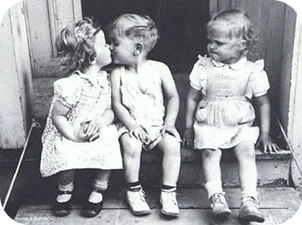
One major obstacle to the freedom to love is the concept of exclusivity. To me, this term means little, as I’ve never truly seen an exclusive relationship. No form of exclusivity—intellectual, emotional, temporal, energetic, or sentimental—truly exists. Even sexual exclusivity falls apart under broader definitions of sexuality beyond just intercourse. Our energies, emotions, ideas, and thoughts continually blend and influence one another.
In this way, relationships, like all parts of life, participate in the vast interconnectivity that drives the cosmos and human society.
Thus, true exclusivity does not exist.
And yet, when two individuals share physical intimacy outside of a relationship, many view it negatively. What boundaries does this cross? What betrayal might this involve? The introduction of physical sex often sparks rejection, anger, and fear. While historical reasons might explain this reaction, they relate neither to innate human nature nor to our spiritual makeup. Nevertheless, the expectation for sexual exclusivity often leads to denying the freedom to love, opposing this first guiding principle I advocate.
Remember, this first guide does not prescribe how to love. If a couple prefers sexual exclusivity, they should embrace that choice. If a community chooses to connect freely, they should have that freedom. Similarly, if an individual finds fulfillment in celibacy, reflecting their inner union or androgyny, they should live this way.
In my life, this principle lights the way as I begin romantic relationships. It helps me navigate through emotional turmoil that might arise from others, including those I hold dear. Its clarity helps dissolve the rejections, jealousy, possessiveness, and demands for exclusivity I’ve described. I always feel genuine joy when a partner shares their happiness about meeting someone new, and I hope for a similar response from my partners.
“No person or thing should stop individuals from loving each other as they wish“… Let’s uphold the freedom to love as the primary and constitutive principle of our societies. Let social rules follow! Let laws follow! Let society build itself around this foundational axis! It goes without saying that freedom to love hinges on the absolute mutual consent and respect for each individual’s integrity and needs.
Regardless of obstacles, I commit firmly to this ideal. I devote myself tirelessly to this beautiful principle. Although it sometimes leads me on solitary paths, it consistently connects me to my inner love, ensuring that my capacity for love remains abundant.
Radical truth
What do couples, and perhaps most people, fear most? Lies and the truth.
This fear underpins human relationships. Doesn’t education teach us to avoid the truth subtly? As children, we learn both not to lie and not to speak the truth fully, under the guise of politeness. “That will hurt the other,” “they can’t handle this,” “that’s impolite,” “that will cause a conflict”—such reasons often suppress our true thoughts, feelings, and aspirations. Ultimately, when we omit the truth, whom do we really protect? We often protect ourselves from potential consequences of sharing these truths.
By withholding our inner truth, we maintain a culture of avoidance and deny others the freedom to respond to this truth. We deny them their right to anger, joy, discovery, resignation, or personal reflection. By omitting the truth, we contribute to a culture of separation.
I embrace radical truth in my life. Of course it reaches a special intensity in romantic relationships. I hide nothing—my emotions, feelings, decisions, thoughts, actions, fears, or vulnerabilities. Once I become aware of something, I make it available to my Beloved. Any pain she experiences from this truth belongs to her. Allowing someone to process their feelings forms part of loving them; it requires staying present and caring.
In practicing this, I have learned that speaking the truth involves an art as complex as that of avoidance or politeness. We should see the truth as a gift. We learn to present our truth to others gently, not forcefully, at their own request. We find words that clothe the bare truth in kindness. We cleanse any harmful elements that might taint this truth.
One major obstacle to the freedom to love is the concept of exclusivity. To me, this term means little, as I’ve never truly seen an exclusive relationship. No form of exclusivity—intellectual, emotional, temporal, energetic, or sentimental—truly exists. Even sexual exclusivity falls apart under broader definitions of sexuality beyond just intercourse. Our energies, emotions, ideas, and thoughts continually blend and influence one another.
For me, truth acts as the foundation of any intimate relationship, keeping it strong, alive, and vibrant. Truth should appear neutral and straightforward, benefiting everyone involved. Often, truth represents an investment, sometimes extending beyond our lifetimes. One must love deeply to speak the truth, and truth must exist for deep love. I do not believe in love that involves deceit or omission.
When a new romantic relationship starts to develop, I owe the truth to my existing partner(s). What experiences have I had? How is this new relationship unfolding? How do(es) my current partner(s) feel about it? What are their thoughts and requests?
People often ask if my partners know about my other lovers. They always do. None of the women in my life remain unaware of each other. Some even know and appreciate each other personally. I aim for simplicity and mutual respect in all my relationships. I value relationships that harmonize like different instruments in an orchestra, each adding and enriching the whole. The text “Your Greatest Gift” says nothing else.
People also wonder if I would accept my partners having other lovers. Certainly. If a relationship delights them, opens their heart, body, and mind, why would I object? What would I fear? Rather, their happiness only brings me joy. How can someone claim to love if they reject love?
Radical truth fosters growth. We must practice it daily, constantly mindful, , by turning off the autopilot, by breathing.
No Attachment to Forms
The law of impermanence implies that relationships evolve and transform, as individually we evolve and transform constantly. We see this clearly in parenting. Throughout the child’s life journey, from baby to adult, the parent-child relationship transforms, rapidly, sometimes brutally. Explain to me why, in matters of love, we cause ourselves so much pain trying to fixate on a form, as if it would last forever! Why do we forget that everyone will change, transform internally and physically, and the relationship will inevitably have to evolve? What egotistical fantasy of frozen eternity plunges us into mothballs before our time? It seems as naive and futile to me as committing to wearing the same outfit all one’s life.
Allowing relationships to evolve as we grow enables us to practice true fidelity. Today we might live together, but perhaps tomorrow we might live with others, or separately, or only see each other occasionally—during vacations or every ten years, or perhaps never again. By permitting relationships to transform, we gift ourselves the ability to love differently, in sync with our personal growth. Love can persist even without physical proximity; after all, don’t we continue to love those who have passed away?
The form should serve the essence, not the other way around. Of course, this does not come easily. Naturally, we gravitate towards familiar forms because they offer a sense of security, a space where we can grow without facing the unknown. Venturing beyond these familiar territories can be frightening and requires learning and adjustment.
Embracing non-attachment to forms often involves mourning, a natural part of life. Just as we accept the changes in our children—mourning the end of their early childhood, their entry into adolescence, or their departure from home to begin their own lives—so too should we approach romantic relationships. Numerous losses await, but each ending foretells the emergence of something new, even if unknown. Let’s allow romantic relationships to evolve freely, without clinging to any one form, and support each other through these transitions.
I recommend that all couples (or groups) commit to fidelity to non-attachment to specific forms. Allow your relationship to reinvent itself every day. Allow old forms to pass so that love can flourish anew.Spend ample time alone, which you can dedicate to nurturing your inner couple. Your relationship with the other will nourish and regenerate itself. Welcome the losses and tears when the time comes. As a materialized form of consciousness, flowing water leaves its original form for another. Water “de-contains” itself to give life to new forms in the fertile soil of life.
I embrace radical truth in my life. Of course it reaches a special intensity in romantic relationships. I hide nothing—my emotions, feelings, decisions, thoughts, actions, fears, or vulnerabilities. Once I become aware of something, I make it available to my Beloved. Any pain she experiences from this truth belongs to her. Allowing someone to process their feelings forms part of loving them; it requires staying present and caring.
Each Relationship Should Nourish the Others
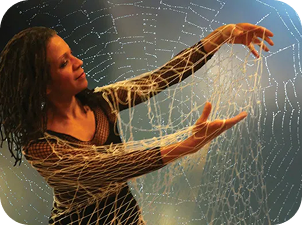
We must remember that we exist within a constellation of relationships. Every new interaction sends ripples through this network, like an insect moving on a spider’s web. We feel these ripples as intellectual, emotional, energetic, spiritual, and psychological vibrations. Whether consciously or not, we transmit these vibrations to those close to us.
The law of impermanence implies that relationships evolve and transform, as individually we evolve and transform constantly. We see this clearly in parenting. Throughout the child’s life journey, from baby to adult, the parent-child relationship transforms, rapidly, sometimes brutally. Explain to me why, in matters of love, we cause ourselves so much pain trying to fixate on a form, as if it would last forever! Why do we forget that everyone will change, transform internally and physically, and the relationship will inevitably have to evolve? What egotistical fantasy of frozen eternity plunges us into mothballs before our time? It seems as naive and futile to me as committing to wearing the same outfit all one’s life.
Therefore, a potential new lover meets not just me, Jean-François, but also the entire constellation of beings with whom I share my life. This connection highlights the importance of the guiding principle of radical truth.
Most couples see a partner’s new relationship as a loss: less time together, diverted attention, diminished feelings. Yet, if one enters a new relationship guided by the principle I discuss here, this new connection will naturally enrich the existing ones.
The form of the relationship again matters less. Practicing radical truth can create a transformative effect that enriches all relationships. Just as we adapt to a new child in the family or a new colleague at work, can’t we adjust to a new lover in similar ways?
Now you understand the four guiding principles of my love life. I hope they can help you too. Remember, you must first address your own issues with attachment, possessiveness, and insecurity to navigate these complex waters smoothly. For many, losing oneself in conventional romantic love serves as an essential initiation, as French author Paule Salomon describes in her book “La sainte folie du couple” (unfortunately not yet translated in English). Sometimes, we must revisit the same challenges repeatedly before we dare venture into the unknown.
I want to express my deep gratitude and love to the Goddesses who have bravely joined me in this dance. With some, I share a passionate romantic relationship. Others have chosen different partners, leading to changes and losses in our relationships. With most, I maintain a deep connection and unwavering gratitude for the shared journey.
You may now enjoy the reading of this beautiful text from Paule Salomon: The Lunar Man.


