
I plan to share here a direct experience that followed a serious motorcycle accident that happened recently, on Wednesday, July 2nd, 2025 at 8:30 pm, while I rode the narrow roads of Provence, just minutes before reaching my home. I write these words from the rehabilitation center where, one step at a time, I climb the long staircase of healing.
I must admit, I hesitated to write this article. This episode feels intimate, painful, and recent. I feel vulnerable, and my body hurts.
Yet I will consider my purpose fulfilled if this account invites us into reflections we may not usually entertain. First, regarding narrative frames: you will see how two different stories unfold and overlap without contradiction. What layers of reality do they illuminate? Then, on the nature of my experience itself — I had a powerful premonition that this accident would happen.
First story: the causal world
I shall begin with the account of the events. They form the first narrative plane, grounded in a causal view of the world where events follow each other linearly, sequenced along a timeline composed of past, present, and future. This kind of narrative also activates a system of values like responsibility and guilt.
That evening, under a beautiful and warm summer sky, I ride my motorcycle — a BMW 1250 GSA — on a charming country road toward the small village where I live in the Luberon.
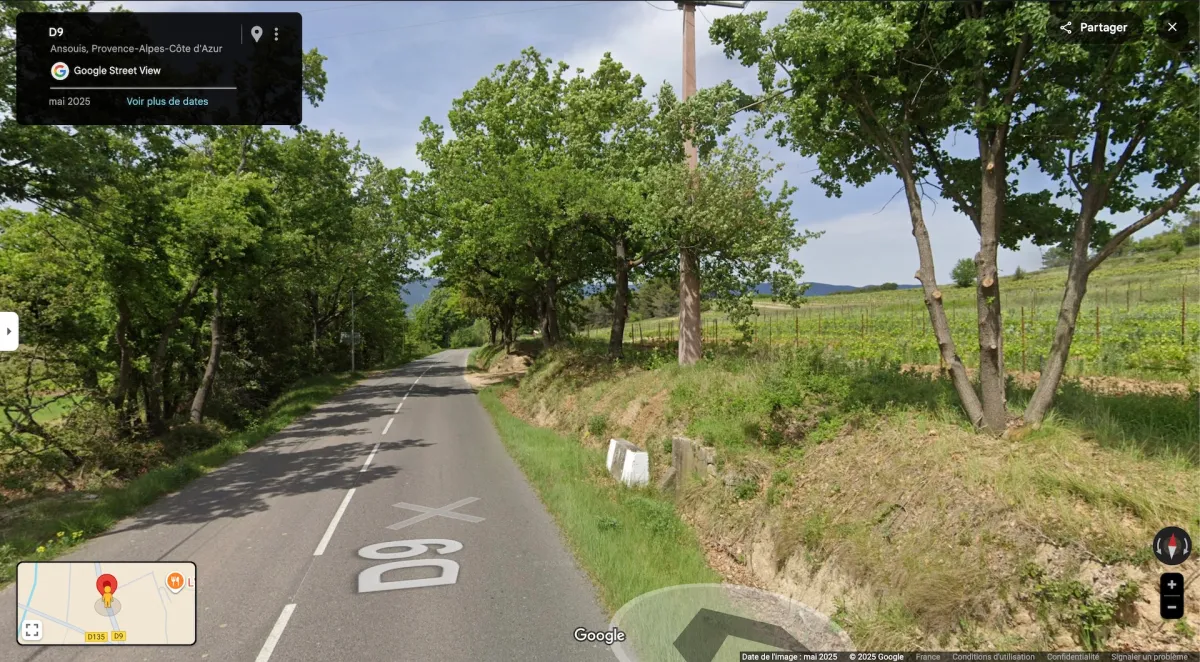
About 300–400 meters ahead of me, just past a bend, a white car appears, speeding madly, likely over 120 km/h. Suddenly, it begins to swerve violently from right to left, with increasingly wide movements. The driver has lost control of his vehicle. He jerks the wheel, desperately trying to stay on the road, narrowly avoiding trees, embankments, and ditches. Each correction only increases the swaying, now covering the full width of the asphalt. The vehicle approaches rapidly. I have ample time to brake and slow to 15–20 km/h, yet no other option lies before me. Will he avoid me? A final swerve. A dreadful impact. I fly over the car and crash violently a few meters away. The motorcycle tumbles in the opposite direction. The speeding car ends its course against the embankment.
Collapsed on the ground, I remain conscious, overwhelmed by an intense pain. Fortunately, some cars followed behind me — witnesses who immediately call emergency services. The rest, you know: firefighters, paramedics, police, hospital, morphine, scans… As for the driver, completely drunk, he assaults the police. They must gang up on him to subdue him, cuff him, take him into custody, and place him in a drunk tank. I spare you other bizarre details about his behavior, later reported by witnesses.
I escape this accident alive and intact through what I can only call a miracle. Severe injuries to my legs led to nine days in hospital, followed by months of rehabilitation — first at the center, then at home.
A typical road accident, one more among thousands, caused by a man soaked in alcohol. This event blends into the vast pool of similar tragedies.
The justice system will, of course, examine the case through a criminal lens, judge it, and issue a sentence that includes a punishment for the reckless driver as well as damages for me. The defense will likely attempt to argue mitigating circumstances for the driver, but the narrative will remain essentially the same, unambiguous: a crime, a victim (me), and a perpetrator (the driver). The sequence fits within a clear chain of causes and effects, on a measurable, linear timeline.
Second story: the a-causal world
I now shift to another level and share a different narrative. This one does involve the causal reality we collectively acknowledge, yet it unfolds within a larger dimension that our cognitive and narrative structures struggle to grasp.
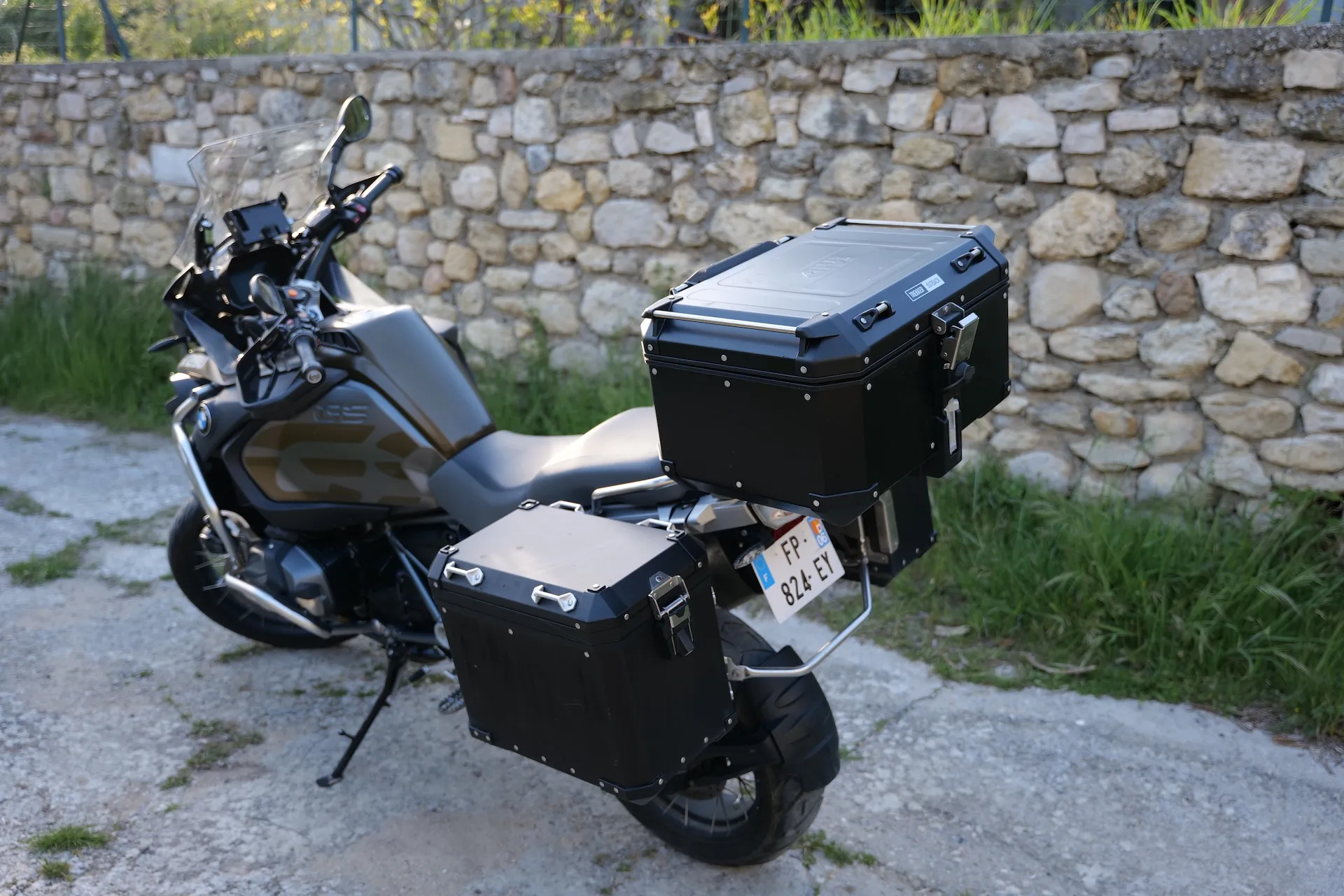
Forty minutes before the accident, as I approach my motorcycle to head home, a sudden premonition seizes me. Riders — like anyone engaged in extreme sports — know these flashes of lucidity where one feels the worst could happen at any moment. But this time, the intuition grips my gut with a unique density, as if a sealed fate had begun to unfold.
It tells me I will not return home that night.
Once astride the motorcycle, I ride even more cautiously than usual, in a heightened state of alert. I move more slowly, keep larger distances, triple-check before overtaking…
Forty kilometers later, upon leaving the highway, I spot smoke rising from a field. A fire triggered by the summer heat? I decide to make a detour to check. I wonder whether this smoke relates to my earlier feeling. I also realize that I have altered my trajectory and will return home later than expected.
On arrival, I see nothing serious — no fire, just a combine harvester stirring up a huge cloud of dust. So I resume my ride, still on high alert.
Ten minutes later, on this beautiful and narrow road in the Luberon, I feel the tension start to fade. Only five kilometers remain. Perhaps that disturbing premonition had no reason to exist after all.
The accident happens right then. My life turns upside down.
Let us reflect on what just took place.
My initial intuition shaped and directed each of my actions. The hyper-vigilant driving, the detour toward the “fire”… Each choice — macro or micro — brought me exactly to the impact point, to the meter, to the tenth of a second. A tenth of a second earlier or later, a meter and a half forward or backward, and the car would not have hit me. It would have crashed into the embankment or struck someone else — but not me.
The premonition led me precisely to the point of impact in space-time. To the meter. To the tenth of a second.
This opens a completely different narrative.
Within this reality, woven through the infinite web of universal interactions, with its emergent effects, non-locality, and possible retro-causality, I participate in this accident just as much as the driver who struck me.
This story overlays the previous one without contradicting it. It transcends and includes it in a broader space of reality — beyond the linear, causal world shaped by our languages and collective narrative structures.
Oedipus on a motorcycle
Sometimes we faintly sense that something will happen — and it does: falling off a ladder, breaking a leg while skiing, slipping in the bathtub, crossing the street at the wrong moment. But in each of these, one causes the event through personal action. This may result from the psyche recording a mismatch between intention and body; it registers — consciously or not — that something may soon occur, and seems to want the experience. The unconscious then takes over.
In my case, I do not create the accident. No mistake, no missed step, no boiling water spilled on my feet, no reckless driving. The event arises from the meeting of two seemingly independent trajectories converging at a precise point in space-time. They appear unrelated — but what do we really know? People often speak of “wrong place at the wrong time” — the path of a stray bullet, a falling rock, lightning striking in an instant. My premonition shaped every movement, dictated my choices, adjusted my speed and routes, bringing me with chilling precision to the impact site.
This echoes the myth of Oedipus. To avoid killing his father and marrying his mother, he flees his city. But each of his choices, meant to escape fate, propels him toward it. He believes he can escape by leaving the city, but remains trapped in an invisible web, woven from his own decisions. Everything Oedipus does to prevent the prophecy actually fulfills it.
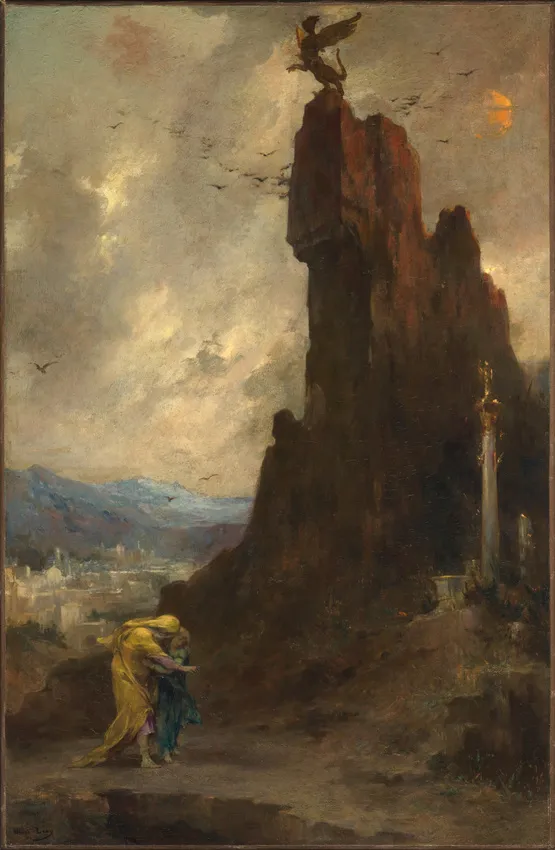
This story shows how our decisions — even the most lucid and rational — occur within a system that rationality cannot access. When truth reveals itself — too late — it offers no release or redemption. It transforms, like a walnut shell cracking open, exposing us to a broader level of consciousness. The accident acts as an initiatory force.
As mentioned earlier, this experience invites us to move beyond linear causality — a collective construction embedded in the structure of modern languages and grammar. Languages think the world for us — let us not forget.
Parapsychology research seems to offer one of the most fertile grounds to explore these phenomena and integrate them into our understanding of reality. First, we must shake off the scientific materialism entrenched as dogma — if not religion.
Over the coming months, I shall devote myself to these questions and share my reflections here.
What meaning do I give to this accident?
People often ask what meaning I attribute to this accident. A relevant question, especially considering that I live a life rich in synchronicities, where I can trace most of what happens back to prior intention.
Most of it… not everything.
So, this accident will take on the meaning I give it, shaped by the events and experiences that will follow. That meaning and its narrative will continue to evolve over time.
I shall share the fruits here.


